
Why Changing Your Behavior Is the Wrong Place to Start


RTT reveals that lasting transformation happens upstream — in the mind, not in the habit.
An exploration of RTT's approach to the root of change
✦
Most of us have tried to change a behavior at some point — to exercise more, worry less, stop procrastinating, or break a cycle we know isn't serving us. And most of us have failed, repeatedly, despite genuinely wanting to succeed. RTT asks a disarmingly simple question in response: what if the approach itself is the problem?
Rapid Transformational Therapy, developed by therapist Marisa Peer, is built on a foundational insight that cuts against most conventional self-help wisdom: behavior is not the cause of our struggles, it is the symptom. Trying to fix a symptom while the root cause remains untouched is not just inefficient. It actively sets people up to fail, reinforcing shame and self-blame when the real culprit was never the behavior at all.
Behavior is not the cause of your struggles. It is the echo of what you believe about yourself , playing on a loop you never consciously chose.
The Chain That Everything Runs Through
RTT traces a clear and elegant chain of causation, one that, once understood, makes it obvious why willpower-based change so rarely sticks:
🧠
First, a thought forms
↓
🫀
Which generates a feeling or emotion
↓
🔄
Which drives a behavior or action
The implications of this sequence are profound. You do not feel anxious and then think anxious thoughts, you think something first, consciously or not, and the feeling follows. You do not act self-destructively out of nowhere; you feel something uncomfortable, and the behavior is the brain's best available attempt to manage it. The chain always begins in the mind.
This is why the person who resolves to stop overeating through sheer discipline so often finds themselves back in the kitchen at midnight. The behaviour was never the root of the issue. It was the release valve for feelings of inadequacy, loneliness, or unworthiness — feelings that were themselves produced by thoughts, usually ones formed long ago and buried deep in the subconscious.
The Subconscious Is Running the Show
What makes RTT's approach distinct is its willingness to go where most surface-level interventions won't: into the subconscious mind, where our foundational beliefs about ourselves and the world were formed. RTT holds that the majority of our thoughts, feelings, and behaviors are not consciously chosen. They are automatic programs, installed largely in childhood, running silently beneath our awareness.
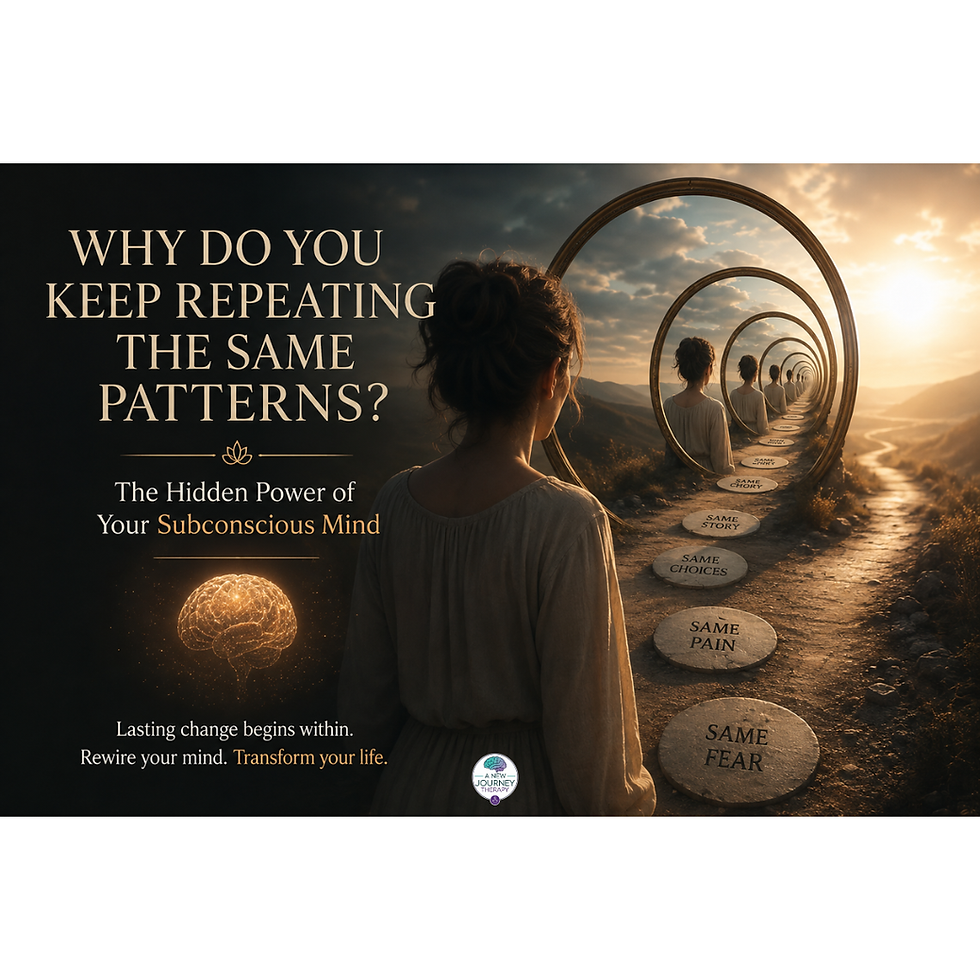
A child who was repeatedly criticized doesn't consciously choose to believe they are not good enough. But that belief becomes encoded. Decades later, the adult version of that child may struggle with perfectionism, people-pleasing, procrastination, or self-sabotage, and no amount of behavior-focused coaching will touch the belief that's driving it all. The program keeps running.
The RTT Insight
Every behavior, no matter how puzzling or self-defeating, makes perfect sense when you trace it back to the thought and the underlying belief that is generating it. The behavior isn't the problem. It's the message.
Willpower Is Not the Answer, Rewiring Is
Conventional approaches to change rely heavily on willpower: white-knuckling through cravings, building habits through repetition, or using external accountability to override internal resistance. RTT doesn't dismiss effort, but it recognizes a fundamental limitation. Willpower operates at the level of the conscious mind. Beliefs operate at the level of the subconscious. And in any contest between the two, the subconscious wins, every time.
This is why someone can intellectually know that they are worthy, talented, or lovable, and still feel, deep down, that they are none of those things. The conscious mind has been updated. The subconscious hasn't. RTT uses hypnotherapy to bypass the critical faculty of the conscious mind and work directly with the subconscious, identifying the original events that shaped limiting beliefs and reframing them at the root.
Once the thought changes, once the subconscious belief is replaced with something true and empowering, the feeling naturally shifts. And when the feeling shifts, the behavior that was downstream of it shifts too. Not through effort, but through alignment. The change feels natural because it is natural. The old behavior no longer makes sense from the inside.
When you change the thought, you don't have to fight the behaviour. It simply stops fitting, like a coat you've outgrown.
What This Means in Practice
For anyone who has tried repeatedly to change a behavior and found themselves back at the beginning, RTT offers something genuinely different: not another strategy for managing the symptom, but a method for removing its cause. The question shifts from "how do I stop doing this?" to "what thought, and what belief, is making me feel the way that leads me here?"
That shift in question is itself a shift in power. It moves the person from someone fighting against their own nature to someone who understands it, and then, gently and deliberately, changes it from the inside out.
RTT's approach is not passive. It asks people to do the deep work of looking honestly at what they believe about themselves, and where those beliefs came from. But the effort is directed at the right level. Instead of swimming against the current with sheer force of will, you go upstream and change the course of the river. Everything downstream changes as a result.
✦
Transformation is not a battle of willpower. It is an act of understanding — and then, with great precision, choosing a different thought.


Comments